Best places to visit in China

Best places to visit in China

In this article, we will describe the most interesting topic – “Best places to visit in China”. China is the 3rd largest country in the world. You will need more than a week just to read guidebook about China. To see all the beauty you need to spend months. But if you are studying in China, you have great opportunities to visit many cities during the holidays. And we are here, to tell you about the most interesting places in China.

Center of the World: Forbidden City

Beijing

Best places to visit in China

Forbidden City in Beijing – the most beautiful and large palace complex in the world. For almost five centuries, 24 emperors ruled the Middle Kingdom from the “Purple Forbidden City”. They were sons of Heaven, and their palace is the centre of not only China but the entire Earth. It was a city within a city, immersed in ceremonies and rituals, consisting of signs and symbols, closed to outsiders. Nowadays, Forbidden City is a part of the Palace Museum, also known as Gugun, “former palace”. Gugun as Hermitage, it is impossible to see everything at one time. Before visiting that place, we advise you to read the book “The Last Emperor of China. Pu Y”.

Bamboo be-be-bears: Chengdu

Chengdu

Best places to visit in China

the Giant panda is the same symbol of the Middle Kingdom as the Dragon and the Great Wall. In the 20th century, the Chinese used panda-diplomacy: they gave rare animals to other states to build relationships. Now you can find pandas in the Sichuan province.

One of the best places to get know black-white teddy bears is the Chengdu Research Base of Giant Panda Breeding. It is better to arrive by 9 am when the pandas wake up for breakfast. After they will sleep until noon. Also, you can meet the Red Panda. It is about the size of a large cat, looks like a raccoon and belongs to a different family, but also adorable.

Oasis on the Silk Road: Kashgar

Xinjiang Uygur Autonomous Region

Best places to visit in China

The Great Silk Road – an ancient system of caravan trails, connecting Europe and Asia. The largest and prosperous cities had grown where the paths crossed. One of them is Kashgar on the western border of the giant Taklamakan desert, on the very edge of the Middle Kingdom. In Kashgar, you feel like you are not in China but in Samarkand or Osh. The same melons, tortillas from tandoor and pilaf, the same noisy bazaars and beautiful mosques.

Like other Chinese cities where small peoples live, Kashgar is divided into two different parts: the old Uyghur and the new typical Chinese. The new one quickly absorbs the old one, so hurry up if you want to see the real Kashgar. Spices, dried fruits, variegated fabrics, carpets, musical instruments, bowls – you will definitely find excellent gifts and souvenirs in local shopping stalls rows.

Secrets of the underwater world: Lake Qiandaohu

Zhejiang Province

Best places to visit in China

Lake Qiandaohu arose when a hydroelectric dam was built on the Xin An River. The water spread and flooded a huge piece of land. You will be able to see only tops of mountains and hills, which make a view of a thousand islands. We advise you to take a boat ride on it. Just make sure that your guide speaks English, otherwise, you won’t learn local legend.

There ar e many stories about the Lake of Thousand Islands. Almost three dozen cities and a thousand villages are buried under the water. The most interesting city is Shi Chen, the “Lion City”, built over 1.300 years ago. Stone dragons, temples with curved roofs, thick walls of houses – all this can be seen if you decide to dive.

An army that is 2,200 years old: Terracotta Army

Shaanxi Province

Best places to visit in China

In 1974, the peasants decided to build a well in the vicinity of Xi’an, but instead of water, they got a full-length clay statue of a warrior. Then it turned out that there were thousands of warriors, and they all looked to the east. So they found a terracotta army, which was buried 22 centuries ago together with Emperor Qin Shi Huang, to protect him in the afterlife.

The terracotta warriors are “stationed” in three pavilions 35 km from Xi’an. See for yourself: there are no statues with identical faces here. Some stay very close – under the glass, as in an ordinary museum. Then you can see that everything – clothes, hairstyles, shoes – is done with amazing realism. The pavilions also keep the figures of warriors in their original form. They are brightly painted in all colours of the rainbow.


In the country of snow: Lhasa

Tibet Autonomous Region

Best places to visit in China

One of the most isolated cities in the world has always attracted Western travellers. But until the end of the 20th century, few people managed to visit Lhasa. Now it is easy to get to the “roof of the world”, you just need to take care of the formalities. According to Chinese rules, a trip to the Tibet Autonomous Region must be organized by a travel agency, which will take care of permits and other nuances.

Life in the old city revolves around the Jokhang Temple, founded in the 7th century by King Songtsen Gampo. A stream of colourful pilgrims flows along Barkhor Street, which encircles the temple. Join them for five or six circles around the Jokhang and walk into a dozen shops with flashy jewellery, thangka paintings and striped Tibetan aprons, then take a break. Drink Chang – a low-alcohol barley beer, and try Shemdre – a simple, hearty dish made from rice, potatoes and yak.

In the footsteps of the emperor: Huangshan mountain

Anhui Province

Huangshan mountain

The mountains of Huangshan floating in the clouds have been inspiring poets and artists for a long time. Even James Cameron admitted that he was looking for inspiration for Avatar. The place is really impressive: the rocks are steeply going up, the paths are laid over the rye, and the waterfalls seem to be pouring straight from the sky. When the pointed peaks plunge into the fog, you feel like a character from a Chinese ink painting.

Climb Huangshan by cable car or on foot. Legend states that the “Yellow Emperor” and the progenitor of all Chinese invented the elixir of immortality at this peak – what if you get lucky? And you also have a very real chance to see Gloria – your shadow, surrounded by coloured rings. In China, this optical phenomenon is called the light of the Buddha.

Geometry in nature: Longji rice terraces

Guangxi Zhuang Autonomous Region

Longji rice terraces

Longji rice terraces are awesome at any time of the year. If you arrive in May, you will see how sprouts are planted and the water fills terraces which reflects the sky. In summer, Dragon’s Ridge turns green – you can’t imagine brighter! In early October, you will see the golden harvest, and by winter you can wander around the snowy amphitheatre in the mountains.

There are lovely villages between the rice steps. Spend the night in an atmospheric wooden guesthouse overlooking the terraced fields. Get know the local Zhuang, Yao, Miao and Dong peoples at the same time. A little training – and you will remember that Miao women love pleated skirts. And Yao is easy to recognize by their unusual hairstyle: they cut their hair only once in their life – at 16 years old.

Everything flows, everything changes: Jiuzhaigou Nature Reserve

Sichuan Province

Jiuzhaigou Nature Reserve

Jiuzhaigou Nature Reserve is hiding in the mountains in the north of Sichuan province. Jiuzhaigou has high wooded mountains, noisy waterfalls and dozens of colourful lakes. In the clear water of which lie natural art objects from fallen trees. The Chinese gave everyone romantic names like Swan Lake, Bamboo Arrows Lakel, Sleeping Dragon Lake or Pearl Waterfall.

In shape, Jiuzhaigou is similar to the letter Y. Buses will deliver you from one awesome place to another. But getting into the reserve itself is more difficult. You have two ways: from Chengdu or from Jiuzhaigou. You need to shake the mountain road for a long time on the bus from Chengdu. Or land at the Jiuzhaigou Huanglong airport (3448 meters), and then another hour by minibus.


Buddhism on the Silk Road: Mogao Caves

Gansu Province

Mogao Caves

The Mogao Caves is a temple complex from the earliest history of Chinese Buddhism. You need to look for it in the southeast of the Taklamakan Desert, where in ancient times two branches of the Great Silk Road were connected. Through these places, merchants delivered carpets, wool and precious stones to China, and also religions. Since the 4th century, Buddhist monks have carved caves here and decorated them with skilful frescoes. The grottoes of Mogao, or the Caves of a Thousand Buddhas, are well worth the journey of any difficulty.

If you are interested in studying in China, please, contact our consultants. Also, you can ask your questions in the comments below. If you are redy for trip to China, we advise you to read that article: “What to pack for China?”.

Features of etiquette in China

Features of etiquette in China

In this article, we will tell you about the most interesting features of etiquette in China. The information can amaze you, but it is worth familiarizing yourself before traveling to the Middle Kingdom.

Acquaintance and small talk

Features of etiquette in China somewhat different than in the West. But they are similar in the list of allowed or undesirable topics of conversation.

The standard greeting in China to strangers sounds like “Nĭ hăo!” equal to “Hello!”. In order to emphasize respect for the interlocutor – “Nín hăo!”. This form adopted with respect to people of older age, leaders, teachers.

When calling the interlocutor by name, you can use the address “Xiānsheng”, which is equivalent to “Master” or “Mister”. “Xiăojiĕ” – when referring to a girl as “Miss” or “Nǚshì” – when referring to a woman as “Madam”.

After greeting you may be asked:

  • Jin lái zěnme yàng? = How are you doing?
  • Shēntǐ hǎo ma? = How is your health?
  • Jiālǐ zěnyàng? = How is your family?
  • Gōngzuò máng ma? = How is your work?
  • Xuéxí máng ma? = How is your study?

You can answer by using these phrases:

  • Hěn hǎo = Very good
  • Hái xíng = Good
  • Mǎmǎhǔhǔyang = Not bad (So-so)
  • Jiù nàyàng = As usually

Features of etiquette in China

One common greeting is  ”Nǐ chīfànle méiyǒu“ = ”Have you eaten?“. This kind of greeting is one of the features of etiquette in China. The meal has a more marked social significance in China than in the West. Therefore, both food and culinary preferences are always welcome topics for discussion.

Sometimes you may be embarrassed or stressed by fairly straightforward questions about your marital status, work, family. Sometimes they can ask about your salary, it is normal in Chinese culture. In general, Chinese people speak much more direct. This is due to the language difference and has no intention of offending you.

There are some topics which better to avoid in your conversations with Chinese:

  • the cultural revolution
  • criticism of the Mao system
  • Tibetan and Taiwan issues
  • animal cruelty

Please note that the Chinese tend to touch you during a conversation. This is just a sign of sympathy, and you should not react rudely to it.

Loss of face

“Save face” and “Loss of face” are very important features of etiquette in China. The Chinese are very proud of their culture, cuisine and traditions. Respect this and try not to put the Chinese on the spot in which they can lose face in front of their compatriots. Try to be polite, smile and compliment their English skills. The Chinese are very sensitive to your behaviour and tend to respond in kind.

Also try to remain calm, self-possessed and friendly in stressful situations. Anger is not constructive here and will not help you in solving the problem. Even if you were deceived, try to solve the problem as gently and flexibly as possible. And you will reach your goal much faster.

In conclusion, a few more words about tolerance. Certain local habits and customs may be unpleasant or difficult to tolerate. Widespread smoking or spitting on the street are usual things. This is natural for the locals, so try not to be annoyed in vain and accept it as part of the culture.

Guests

In general, the Chinese are known for their hospitality. Inviting a foreigner to visit your home is a sign of great trust. If you received such an invitation, you should express your gratitude and answer exactly. If you are busy at the appointed time, you should express your regret and try to arrange another time.

Choosing gifts

When making a visit, it is better to bring a gift with you, especially if there are small children in the house. A gift must not be expensive. Moreover, an expensive gift is more likely to put the owner of the house in a difficult position. When choosing a gift, take into account the tastes and interests of the owner of the house. As well as the event for which you were invited, and buy something meaningful and practical or something artistic, or just a souvenir.

The taboo on numbers. A Chinese proverb says that happy events often come hand in hand, so it is considered a good omen to give paired items. And try to avoid odd numbers when giving wedding gifts.

Features of etiquette in China

The taboo on colours. The Chinese associate black with sad events, for this reason, black wrapping paper should not be used for gifts. Rural populations in China often dress in white at funerals, so white is taboo in many cases. The Chinese, especially the older generation, are very fond of red and regard it as a sign of favour. Red garlands, lanterns and other red and gold decorations are traditionally used to decorate homes on New Years and at weddings.

Special taboos. In China, you run the risk of offending a Chinese by presenting things like a watch. “zhong” = watch = end. Also, word “li” = pear = separation.

Gifts must be festively wrapped, don’t use newspapers or plain brown paper. The price tag should be cut. The host will thank you and put your gift aside since it is indecent to unfold the gift in front of guests.

Features of table etiquette in China

Upon arrival, it is worth observing the features of etiquette. You can sit down at the table after the older generation takes their places. At dinner you will most likely be offered wine or beer. If you do not drink alcohol, it is better to notify the owner in advance. While the next dish is being served, the owner of the house can get up and propose a toast to your health. At this moment, you should interrupt, put aside the devices and listen to the toast while standing. As a guest, you should also propose a toast in return for the host and other guests.

During the meal, the host can take the initiative and choose food for you. You should never show that you did not like a particular treat.

It is considered bad form to remain silent at the table throughout the evening. At the same time, your voice should not be too loud. It is permissible to stretch across the table for any dish in front of the faces of your neighbors. The bones are placed directly on the table or in a special plate. Never collect them on your plate.

Features of etiquette in China

After the end of the meal, the chopsticks are placed on the table or on a special chopstick holder. Putting chopsticks parallel to each other on a plate is considered bad omen. It is also unacceptable to stick sticks vertically into a bowl of rice. Try not to drop your sticks – this is also a bad omen.

Don’t leave the house right after dinner. Stay and have conversations after dinner over a cup of tea. As you leave the house, be sure to thank the host again for their hospitality and say goodbye to all other guests and family members.

All these features of etiquette in China can really confuse you. However, it is worth familiarizing yourself with them before traveling to China. We also recommend reading the article on the differences between Chinese and Westerners.

Universities in China in IT, Business, Science and others

Universities in China in IT, Business, Science and others

In this article, we decided to unite the best universities in China in the areas of IT, Business, Science and Technology, Medicine, Jurisprudence, Hospitality.

Chinese Universities

Computer Science and Information Technology (IT)

  1. Zhejiang University
  2. Huazhong University of Science and Technology
  3. Jiangsu University
  4. Shanghai Jiaotong University
  5. University of Science and Technology of China
  6. Shandong University
  7. Tianjin University
  8. Harbin Institute of Technology
  9. Wuhan University

Business and Management

Also includes E-Commerce, Entrepreneurship, Human Resources, Logistics, Management and Marketing.

  1. Peking University
  2. Tsinghua University
  3. Shanghai Jiao Tong University
  4. Fudan University
  5. Renmin University of China
  6. Shanghai University of Finance and Economics
  7. Xiamen University
  8. Southwestern University of Finance & Economics
  9. Sun Yat-sen University
  10. Central University of Finance and Economics
  11. Beijing University of Civil Engineering and Architecture
  12. Xi’an Jiaotong-Liverpool University
  13. Beijing Normal University

Science and Technology

  1. Zhejiang University of Science and Technology
  2. Changchun University of Science and Technology
  3. South China University of Technology
  4. Harbin Institute of Technology
  5. Zhejiang University of Technology
  6. Beijing Institute of Technology
  7. Tianjin University
  8. East China University of Science and Technology, ECUST
  9. University of Science and Technology Beijing
  10. Northwestern Polytechnical University
  11. China University of Petroleum – Beijing
  12. Xi’an Jiaotong-Liverpool University
  13. Chongqing University
  14. Nanjing University of Science and Technology

Medicine

  1. Nanjing Medical University
  2. Xiamen University
  3. Zhengzhou University
  4. Kunming Medical University
  5. Jiangsu University
  6. Xi’an Jiao Tong University
  7. Ningxia Medical University
  8. Sichuan University
  9. China Three Gorges University

Jurisprudence

  1. Tsinghua University
  2. Peking University
  3. Chinese University of Hong Kong
  4. Shanghai Jiao Tong University
  5. Fudan University
  6. Renmin University of China
  7. Wuhan University
  8. Zhejiang University
  9. China University of Political Science and Law

Hotel business

If you want to study in Chinese Universities, please, contact our consultants. Leave your applications on our website. Also, you can ask questions in the comments below.

What to pack for China?

What to pack for China?

“What to pack for China?” is the main question for students who received a visa and ready to go. Travel to another country is always an adventure. Exciting, but intriguing and fascinating. Even more so when it is planned to leave for a long time. Ahead is new, unknown, but quite often, expectations are much nicer than the trip itself. Why? English writer Jeff Dyer once said: “The ideal is to feel at home anywhere, everywhere”. Therefore, for the departure, it is necessary not only to prepare psychologically but also, for example, to competently approach the choice of what to take with you on a trip.

We have prepared for you check-list of things, that must be in your baggage. Read and check with yours. Ready? Go!

What to pack for China?

Clothes

We really are what we eat. And also what we put on. Clearly, that you want to take all your favourite things, but it makes no sense. For example, take a down jacket with you if you plan to arrive in China in spring, summer or even autumn. Believe me, you will have enough time for shopping.

Clothes

  • one jacket for the season, universally – sports, because in the fall, you can wear a sweater, sweatshirt, jumper, etc under it;
  • warm hat in winter or autumn, the rest of the time – baseball cap;
  • several T-shirts and tops, if desired – shirts;
  • a pair of shorts, tights, several pairs of socks (you don’t have to limit yourself here, since they won’t take up much space), several sets of underwear;
  • comfortable(!) shoes, the best – sneakers;
  • from the accessories, it is reasonable to take sunglasses, although buying them will not be a problem. A few handkerchiefs can also come in handy.

Medicines and personal hygiene

The most important items. Not a single human body is completely protected from colds, food poisoning, and stressful situations. Take this moment with all responsibility: you may also need to consult with your doctor. We offer to take with you:

  • specific medicines (appointed by your doctor, like, asthma medicine);
  • medicines for digestion – Chinese food is very tasty, but
  • the difference in the ingredients of the dishes, the methods of their combination and preparation + short-term discomfort from jet lag can cause many problems;
  • allergy pills, since there are too many new things in China and it is not known how the body will react to this.  For the same reason, by the way, you can grab anaesthetic and antipyretic;
  • vitamins will also be useful: ascorbic acid or multivitamin complexes;
  • toothbrush, toothpaste (small tube), a bar of soap, razor, shampoo, antiperspirant, loofah and towel – all these things you can buy on the first day, but we recommend you to prepare it for the first time.

Medicines and personal hygiene

Gadgets

Nowadays, it is difficult to imagine anyone without a phone and laptop, so the necessary electronics, of course, must move around the world together with its owner. The development of technology, however, makes it possible not to take a hard drive – information (all scanned documents) can simply be uploaded to the cloud and downloaded upon arrival. Although the most important thing should be on the hard drive, in case of problems with the Internet. Necessarily needed:

  • mobile phone: upon arrival in Сhina you will need to buy a SIM card of a local operator;
  • personal laptop: of course you can by one in China (it could be cheaper than in your country), but the laptop won’t be adapted to your language;
  • tablet, photo camera – if there is a need;
  • battery charger, memory card and adapters (China has its own standards).

What to pack for China

Food

Chinese food is diverse and delicious. However, there is a shortlist of food, which we advise you to take:

  • coffee – if you like that drink, then for the first time we recommend taking it, especially since the inhabitants of the Celestial Empire are ambivalent about it;
  • spoon and fork, they will not take much place. Don’t forget to put them into baggage, not into hand baggage;
  • you can take chocolate because in China it is expensive.

What to pack for China

Money

The main rule: “More money, less stuff”. Since almost everything can be purchased in China. Take with you:

  • yuan – about 2.000 (300$). No need of dollar, euro or other foreign currencies. It will be very hard to exchange money in yuan;
  • international banking card (Visa or MasterCard). They must be serviced abroad. Do not forget to also remove the limit “for cash withdrawals”, as well as connect the mobile banking service and install the appropriate (if available) application on your smartphone.

What to pack for China?

This is, perhaps, the most important thing that you should take. You will probably want to take something that is not included in our check-list, something impractical, but favourite. It can be a toy, a mascot, a book. In other words, everything that will create a good mood. We hope we answered your question “what to pack for China?”. Good luck!

If you are still thinking about admission to Chinese universities, we advise you to read our article about scholarships. And feel free to leave your questions in the comments below or ask our consultants.

Study in China 2020 – COVID-19

COVID-19 and studying in China in 2020 – information for applicants in 2020. China considered as a country with a low level of incidence of COVID-19 (coronavirus).

Study in China 2020 - COVID-19

Introduction

Facts about COVID-19 (08/13/2020)

World China USA Russia
Confirmed 20.624.316 84.756 5.208.399 907.758
Recovered 12.831.800 79.398 2.669.119 716.396

Data from Wikipedia

Nobody expected this.

Since 2014 we assist international students with enrollment to universities in China. From that time, thinking about the future of our team, we certainly considered various possible risks that could affect students and our work.

Here are some approximate risks that we thought might affect our work:

  • Political warfare between China and the USA
  • Political circumstances between China, Russia and Kazakhstan
  • The deterioration of the situation in Eastern Turkestan (Xinjiang)
  • Closure of the One Belt One Road – which provides scholarships to study in China

But the emergence of COVID-19 and its consequences took everyone by surprise. Nobody expected that pandemic could arise and its consequences will be large-scale.

Study in China 2020 - COVID-19

Adaptation to COVID-19

China, where the virus appeared, fully controls the situation with COVID-19.  And in 2-3 months handled the situation. Center of the epidemic moved to Europe and America. For us, the news that COVID-19 is not a threat in China is good.

Study in China 2020 - COVID-19

Now students who are in China or have returned to their countries study online. Students who planned to pass HSK can not do this both in China and their countries. It is expected that online studying will be continued in the fall semester. And in the spring semester all universities will resume studying normally.

There is a chance that in the middle of the fall semester if the borders open, students will be able to return to universities.

children in elementary school in Hangzhou

Study in China 2020 - COVID-19
Such hats are worn by children to maintain their distance

We continue to recruit students to study in China as planned. China is reopening schools and educational institutions in all big cities. For example, children in elementary school in Hangzhou wear these hats to maintain social distancing. At the entrance to the public places, visitors are given protective equipment and external disinfection.

The outlook for fall 2020

According to Chinese universities, they are going to resuming work in the fall. The main thing is that the country where students come from should be open. Before coming to China, students will be required to take a virus test. And in case a virus is found, a student will be quarantined.

Let’s imagine the worst case – the 2nd wave of the virus has started. It is affecting the whole world. In that case, according to the past experience in the fight against COVID-19 China will quickly neutralize hotbeds and for our students will no longer pose a danger. However, it may be difficult to depart from your country. If students are unable to return, universities will wait for their arriving. They will start the educational process online.

6 facts about studying in China in post-pandemic times

  1. China’s central and local governments update confirmed cases of COVID-19 and related areas every 24 hours.
  2. Chinese Government provides “free treatment to all people with COVID-19” both Chinese and foreigners.
  3. Chinese hospitals are well-equipped and know how to fight against COVID-19. All countries will take into account recommendations for the treatment from China and WHO. The number of recovered people is about 80.000 in China.Chinese traditional medicine such as ‘lianhuaqingwen’ is 91% effective for patients with mild symptoms of Covid-19.
  4. With the help of reports from confirmed patients, the Chinese Government can track virtually all people who may be at risk of infection and carry out proper quarantine medical surveillance.
  5. The Chinese Ministry of Education has developed a campus contingency plan.
  6. Chinese vaccine against COVID-19 is in clinical trials.

Professor Ying Qi

Chinese differ from Westerners

Illustrations by Yang Liu

Chinese differ from Westerners in their worldview, behaviour, reactions and preferences. There are many volumes of literature, hundreds of dissertations about that issue. No matter how many years you have lived and worked with Chinese, you will not be able to get used 100% to the differences. Even after you’ve learned the classics by heart, you may admit that you don’t understand Chinese at all.

We want to show you a series of graphic illustrations made by the Chinese artist Yang Liu. She lived in China until the age of 14, then moved to Germany. She was able to quite clearly display the difference between the Eastern and Western approaches to life. Of course, China is changing and modernizing rapidly. And, perhaps, after some time, some of the postulates from this scheme will become obsolete. Moreover, any scheme is a generalization. And there are always exceptions to the rule.

The blue parts are Western, the red parts are Chinese.


Freedom of expression

Chinese differ from Westerners

This scheme illustrates not only freedom of expression, but also the way to attain the goal. Western clearly see the goal and goes to it. The Chinese follow a twisting route. They focus not on the goal, but on the way to it – the process is more important. This path will never be straight. Only evil gooie spirits walk on straight paths. This feature is also embedded in speech: due to the fact that there are many homophones in the Chinese language. Homophones – words that sound the same, but are spelt differently and have different meanings. Such situations often arise when the interlocutors misunderstand each other. Therefore, the Chinese say the same thing several times, in different words. A European will say this much faster, with a minimum of words and phrases.


Punctuality

Chinese differ from Westerners

“Accuracy is the courtesy of kings and the duty of all good people”. With these words, the rapid development of etiquette begins in Europe. The Chinese have a more vague framework. However, if the Chinese want to please you, he will appear second a second, and sometimes in advance.


Queue behaviour

Chinese differ from Westerners

Quite often the Chinese stand like this – in a bunch. And as space becomes free, they rush to the target, actively working with their elbows. You snooze, you lose. At the same time, if you politely ask to let you pass, they will do it without any questions.


The noise level in public places

Chinese differ from Westerners

In Europe, public places are generally much quieter than in China. They all speak loudly. However, you quickly get used to it.

If you want to study in China, please, contact our consultants. They will answer all your questions. Also, you can leave your questions in the comments below.


Social communications

Chinese differ from Westerners

Western society is more atomic; a person does not have many personal connections. In China, personal connections play a very important role. Basically, everything is achieved through personal connections. The web of all kinds of relationships – family, friendship, business. Thanks to this, many issues can be solved quite easily. However, this is also a serious obstacle.


Problem-solving approach

Chinese differ from Westerners

If the problem can be circumvented, the Chinese will do it. This is the art of Tao – not to go through the thicket, but to get around obstacles. Just like water flows around a stone. In this regard, the Chinese differ from Westerners quite strong.


Own ego

Chinese differ from Westerners

The ideas of human rights, personal integrity and private property have a long history in Europe. Collectivism is one of the characteristics of the Chinese. The ego is criticized both in traditional teachings (Confucianism, Taoism) and in Buddhism. The ego is what obscures the Tao, the true nature of reality, from the person.


Relationship with the leader

Chinese differ from Westerners

Between the leader and subordinates in China, a vertical relationship of the “senior-junior”. It is governed by the Confucian principles of “fatherly love” and “filial piety.” Even if the boss is younger than the subordinate.


Travel behaviour

Chinese differ from Westerners

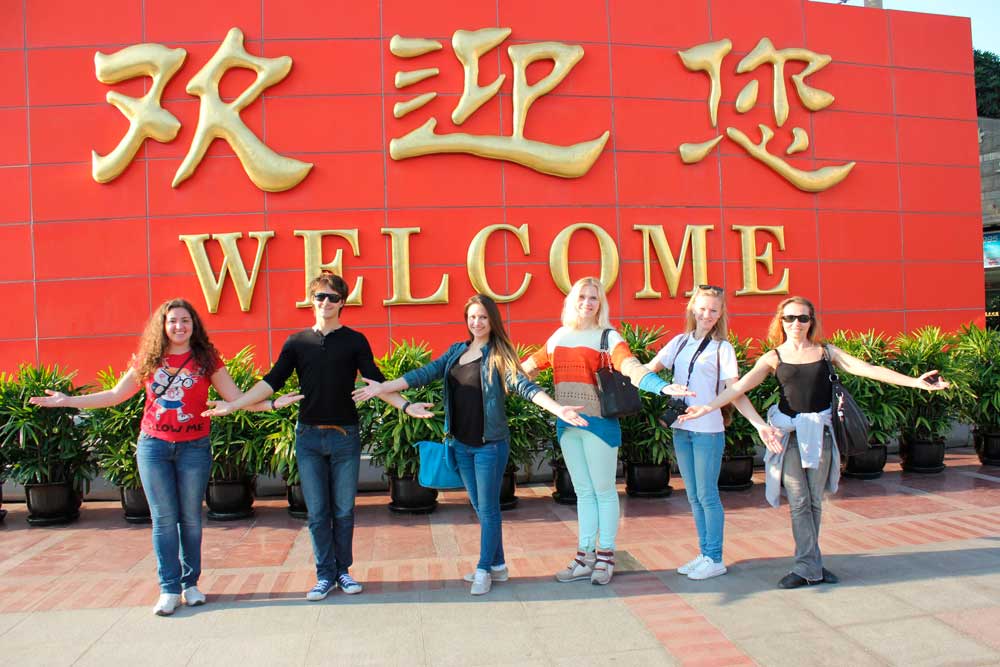
Comparing Europeans and Chinese people, the Chinese take a lot more pictures. Moreover, they still love to be photographed. Sometimes it is difficult to photograph an object because a Chinese woman or a couple taking the most incredible poses while someone photographs them.


Three meals per day

Chinese differ from Westerners

Europeans and Americans often use semi-finished foods. The Chinese, on the other hand, prefer freshly prepared food or food in eateries. However, young people actively buy semi-finished products and eat them.


Popular dishes

Chinese differ from Westerners

For a Westerner, Western food is still more familiar and popular, and for the Chinese, Chinese. But with exotic things the opposite is true. For us, exotic is oriental cuisine, and for the Chinese – European cuisine.


You may be interested in reading this article to help you prepare for your trip to China.

Drink preferences

Chinese differ from Westerners

The fact that all Chinese people drink tea is not entirely true. Good tea is very expensive. Therefore, many Chinese people still prefer plain water.


Attitude to weather and life situations

Chinese differ from Westerners

Keeping face in all situations is another quality of the Chinese. This is primarily about educated Chinese or those who want to please you.


Party behaviour

Chinese differ from Westerners

At parties in Europe, buffets are often held. Society is split into small groups. The Chinese, on the other hand, often sit at a large common table with dishes.


Attitude towards elders

Chinese differ from Westerners

The Chinese do not have such a developed pension system as in European countries. Caring for the older generation often falls on their children and grandchildren. Moreover, in traditional society, the older generation is the bearer of knowledge and traditions that it must pass on to young people. However, on the Chinese streets, you will not find grandparents with grandchildren everywhere. Usually, you will the elderly near parks or houses.

In this article, we have explained how the Chinese differ from Westerners using illustrations by Yang Liu. You can find more illustrations by following that link.

Numbers in China

Chinese numbers

As in all countries of the world, numbers in China are used to represent different digits. As elsewhere, Chinese numbers are divided into two types:

  • ordinal numbers: which denote the serial number of something, for example, the first, second;
  • quantitative numbers: denoting quantity or count.

You should write numbers in China, like all other written characters, by using hieroglyphs. This is the main difference between the Chinese numbers and European ones. You can write composite numbers by combining hieroglyphs in the desired order.

In China, you can count up to trillions, the large digit capacity of numerals in Chinese will allow you to do this. There are two styles to write numbers in China:

  • regular: they have a simplified form and people use them in everyday life;
  • official: this style means writing numbers in the form of a complex combination of hieroglyphs. People use them mainly in official documents, invoices, checks in stores.

The picture below illustrates how Chinese numbers can be shown by hand:

Numbers in China

The numbers in China look like this:

1
èr 2
sān 3
4
5
lìu 6
7
8
 jǐu 9
Líng 0

In order to write down the numbers from 11 to 19, you must first write the hieroglyph 十 (shí), meaning “ten”, then the numbers from one to nine are added. Numbers from 20 to 99 can be written in a similar way, the only difference is that the hieroglyph “ten” must be written not before the number, but after. If the number has a capacity in units, then it is indicated by the third hieroglyph from the right. We will show you some examples:

20 – 二十, 30 – 三十, 40-四十, 50-五十,25-二十五,38-三十八,99-九十九

If we talk about ordinal numbers, then everything is simpler. They are formed only with the prefix di (第), for example, Dì yī – the first, Dì wǔ – the fifth, etc.

Interesting fact. In Chinese, all items are counted exclusively in pieces. For example, you cannot say “two bananas”, the Chinese say “three pieces of bananas”.

Since ancient times, numbers in China have been used not only to indicate numbers but also as symbols. Odd numbers are Yang masculine, and even numbers are Yin feminine.

Meaning of numbers

We will briefly tell you what the Chinese numbers from 0 to 9 mean:

— 0 is used to denote completeness, emptiness and God. Zero is infinity; it has no beginning or end.

— 1 symbolizes leadership, honor and dignity and denotes continuous improvement and development.

— 2 is the balance between Yin and Yang, that is, between a woman and a man, also denotes cooperation. Often at wedding ceremonies, you can see the hieroglyph of this figure, because it means “double happiness”.

— 3 According to the “Book of Changes”, which describes all the numbers in China, the number 3 is the unification of earth, sky and man. Three for luck, success and achievement of goals.

— 4 it is a figure of the material order, it symbolizes the material world. However, this figure can be compared with our number “13”, it is also considered an unfavourable sign and is pronounced like the word “death”. In Chinese hotels, you cannot find a fourth floor and a fourth room.

— 5 these are water, fire, metal, wood and earth (philosophical elements), as well as health, longevity, love of life, prosperity and death (blessings). A very significant figure for the Chinese.

— 6 auspicious number, similar to the word “prosperity”.

— 7 considered a feminine number that determines her future life.

— 8 denotes abundance. People use as a talisman and defining a man’s life.

— 9 contains the characteristics of all the above numbers, therefore it is considered the number of the emperor.

These are such mysterious and interesting numbers in China, not just squiggles indicating the quantity, but symbols of wisdom.

Also, advise you to read our article about the differences between Chinese and Westerns.

Why you should study in China – 13 reasons

Why you should study in China

Each year, more students think about study in China. And if 10 years ago study in China wasn’t so interesting for many foreign students. Now more and more applicants and their parents are making the choice in favour of China. They know, that China provides more opportunities for their future. Here is a list of reasons “Why you should study in China”:

Why you should study in China

Study in China: 13 reasons

  1. Invaluable experience and discovery of Chinese culture.
  2. According to the most pessimistic overviews, for at least 15 years the economy in China will grow rapidly. That fact guarantees highly profitable job!
  3. The opportunity to touch the most ancient culture! Many masterpieces of culture are protected by UNESCO
  4. Chinese language – the most common language in the world. More than 1 billion people speak on that language
  5. It’s rare to meet European who knows Chinese. And rare qualities are more valuable. A translator from Chinese is more expensive than a translator from English!
  6. Chinese culture is a culture of every fifth person on Earth!
  7. Study in China will give your opportunity to make friends from all over the world!
  8. The level of education in China is as good as in western countries. Chinese are mobilized, so they try to take and create only the best, THE MOST MODERN!
  9. Safety! There is almost no crime in China. The laws are very strict. Anyway, the Chinese do not tend to violate the law. Their religion, Confucianism, is mainly based on worship towards elders and towards the state. You can walk in the city completely safely even on dark streets.
  10. Study in China is much cheaper than in the USA and the UK.
  11. The main advantage of Chinese universities is that you can come to the country and go to study without knowing a single word of Chinese. But it better to prepare and learn basics. The best way is to pass 1-year language courses. About Chinese courses, you can read by following that link.
  12. There are no age restrictions to study in China.
  13. The cost of living in China is very cheap. The fact that in order to have the same level of benefits as we used to have in our countries, in China we have to pay less.

If you want to study in China, please, contact our consultants. They will answer all your questions. Also, you can leave your questions in the comments below.

Learn Chinese Online

Learn Chinese online

Nowadays, person, who wish to learn Chinese online, has many opportunities to do it in the most effective way. Starting from collections of books in electronic format, ending with all kinds of online Chinese courses. On the Internet, you can find textbooks, online courses, video courses, programs and applications to learn Chinese online. If you decide to learn the language of the Middle Kingdom online, then you only need a laptop (computer) or a phone with Internet access. In this article, we will discuss all the nuances of learning Chinese online.

Let’s start with the advantages of the online format to learn Chinese and any other languages in general. The biggest advantage, we can mention – it is an opportunity to adjust your study schedule. You choose a convenient time for yourself (unless these are online group courses). After downloading the application for the study of hieroglyphs, you can repeat the material during your free time, giving it literally a couple of minutes. Therefore, studying at least 5 hieroglyphs every day, by the end of the month you will know 150. And in a year you will have mastered 1800! For example, to successfully pass HSK4 (the level required for admission to a Chinese university), you need to know 1200. Thus, while simultaneously pulling up grammar, writing and reading, you can prepare yourself for passing this exam in an online format.

Pros and cons of online language learning

Learn Chinese online not only saves your time, since you don’t have to go anywhere and spend it on the road. But in terms of finance is more profitable. You have two formats for offline Chinese learning. The first is to go to China for a language course, which is not the most budget choice if you are not a scholarship holder. The second is to sign up for local courses. This option loses to the first on many fronts. But it is several times cheaper than the first, however, more expensive than online courses.

Access to a huge amount of free materials to learn Chinese online, and even more paid content. YouTube is updated daily with video lessons on learning Chinese. They will tell you about the finer point of Chinese grammar, show new characters in graphic form, analyze translations of popular songs, and much more. You can find a similar base of material and even more on other sites and in many applications. In them, you can find material to learn Chinese online in a variety of forms. However, a huge disadvantage of such platforms is the lack of the ability to practice speaking and ask personal questions about the topics covered. That is mean, that the learning process is going without interactive communication between teacher and student. Even in free apps, you won’t be able to get full access to all the material without paying for a subscription.

Online Chinese courses

In our opinion, the most effective online format to learn Chinese is online Chinese courses. Online courses combine the best aspects of both online and offline learning. By signing up for online courses, you can choose for yourself the level, direction, teacher and personal training schedule. At the same time, you can choose group lessons for more atmosphere, or private ones for greater productivity. And all you need to have at hand is a laptop, tablet, computer or phone with Internet access and a headset.

You can take online courses while sitting at home or with a cup of coffee in a cosy coffee shop, or even better somewhere on the seashore. Because for online courses your place is not so important, but your desire and aspiration is more important. And while studying online, snow and rain will not prevent you from turning on the next course, there will be no thoughts of a clogget public transport or a heavy backpack.

We would like to note that our team also took care of the comfort of our students, clients and ordinary visitors by developing branded online Chinese courses. You can learn more about our courses by following that link or asking our consultants.

You can also see the list of applications that will help you learn Chinese online at this link.

We wish you the best in learning Chinese!

First months in China

First months in China: difficulties, understanding, love

First months in China could be very difficult to get used to. After moving to a new country, you just feel lost: your family, friends, lovely places – everything’s a thousand miles away. On the other hand, new sounds, smells, unknown streets and language are around you. What can throw you off-balance, and then become remembered and beloved? In this article, we will introduce you to all aspects of Chinese life. Also, you can find more information about studying in China by following that link.

Culture

Immediately accepted and blend in differently another world could be very difficult for many people, especially in China. China has its own multifaceted and unlike European culture, traditions and habits. Most of us know, how is it difficult to live without your favourite TV channels. And, of course, without homemade food. Most of all you miss simple things. Nevertheless, new culture makes you perceive the world differently: brighter, hotter and stronger. Maybe at first, you will feel lost, but it won’t take a month and you will enjoy everything new and unusual.

First months in China

Language

Everyone fears this the most. During the initial period, hieroglyphs and tonality will prevent you from sleeping at night and worry you. However, not only a language but your thoughts and attitude will change. Your mind will be “readjusted” to the Chinese language and its further study will be easier.

First months in China

Communication with family and the Internet

Foreigners are constantly frightened and said that in China they will be cut off from the world, that there is no Internet in China. Firstly, there is Internet in China. Secondly, most of the familiar programs run smoothly. Thirdly, there are special plugins and browsers for everything else that is banned in China. For example, ZenMate is a plugin for Chrome and Firefox, easy to install, helps to bypass the blocking, VPN just opens in the browser. Tor has a worse speed, but you can use it too. So you shouldn’t worry, you can easily communicate with your family and friend despite the distance.

First months in China

Cuisine

Chinese food is very different from Western food. Initially it hard adjusting to unfamiliar food. A little spicy is a very spicy, one dish in a cafe is one dish and a bunch of small plates with various additives. However, there is one big advantage, that characterizes the Chinese healthy food cooked with love. Chinese always cook with a good attitude, without an acceleration of the cooking process.

First months in China

Weather and climate

China is a country of contrasts, and the weather is not exclusion. If in the east of the country rain is not uncommon, then in the west prevails arid climate.

One of the characteristics of the climate in China – monsoon winds. Cold north winds blow in winter, summer is hot, so the seasons abruptly replace each other.

Chinese climate

At the first time, it will be hard to adjust to climate change. Therefore, if you easily catch a cold, stock up on medicines while still in your own county. Cause in China you will not immediately understand the variety of Chinese medicines.

Mentality

Chinese likely to simple and rational actions, that is why their proverbs and sayings are distinguished by impeccable logic and objectivity: “Do not forget the past, it is the teacher of the future”, “Happiness has come – be vigilant”. All their actions are imbued with pragmatism and enterprise. Now China is a developed and high-tech country, but old habits remain. The inhabitants of the Middle Kingdom are trying to find benefits and gain useful experience in everything. But no matter how it may seem that the Chinese are callous and mercantile, this is not so! The Chinese value friendship, take care of their family and know how to sincerely and passionately love.

First months in China

Do not be afraid of anything, do not listen to anyone – follow your dream, love yourself and others, love your native land and a new mysterious world, get a prestigious education in an amazing country!

If you want to study in China, please, feel free to contact our consultants. Leave your application on our website. Also, you can ask your questions in the comments below.