Scholarships to Study in China

Scholarships to Study in China

Starting from 2014 Chinese Government actively offers many scholarships to international students. Annually we help hundreds of students with enrollment at universities.

Grants are provided for next programs:

  • One-year language program for learning Chinese Language
  • Bachelor’s degree program in both Chines and English languages
  • Master’s degree program in both Chinese and English languages
  • PhD program in both Chinese and English languages
  • MBA program in both Chinese and English languages

Programs which are not supported by any quotas: short-term courses, student exchange programs, academic mobility programs, summer camps.

Studying in China
Student from Harbin Institute of Technology — Chinese language program

General requirements for scholarship

  • Good academic performance
  • No criminal record
  • List of scholarships application documents

Different types of quotas are available to most countries in the world. There are countries whose students receive many denials of admission. This is due to the political peculiarities of the country or the poor reputation of students who arrived earlier from these countries.

At the time of 2020  countries with the leading number of students studying in China:

Country Students Country Students
 

South Korea

50600 Thailand 28608
Pakistan 28023 India 23198
USA 20996 Russia 19239
Indonesia 15050 Laos 14645
Japan 14230 Kazakhstan 11784
Uzbekistan 6500 France 10695

Chinese University scholarships

Scholarships from universities in China are the most common. This type of financial aid is the easiest and most convenient to acquire. Every university in China that has a permit to study international students owns a certain number of quotas. University scholarships to study in China are of the following types:

  • Type A covers accommodation, tuition fees and monthly paid stipend
  • Type B covers only tuition fees
  • Type C covers partly tuition or accommodation fees

Usually 4-5 people apply for one grant place.

Studying in China

Chinese Government Scholarship

Government Scholarship – China Scholarship Council (csc.studyinchinas.com) – governmental program that allows anyone from all over the world to receive quotas from the Chinese Government. These scholarships can be applied through the platform, or in subsequent years of study at the university. The deadline for applying for this type of scholarships is until March of each year. Answers about receiving or not receiving confirmation of admission to the grant come in August. We also recommend taking into account that this method of obtaining a grant has a large competition: 450 people apply for one grant place.

Provincial Scholarships

There are 22 provinces in China, where each province has its own budget for the development of education. From here, educational grants in China for foreigners from various provinces are funded. For example, a very common grant is a grant from Jiangsu Province, a province of the Shanghai. Provincial grants are not much different from university grants. You can also apply for provincial grants through our website

Confucius Institute Scholarship

Confucius Grants, or rather Confucius Institute Scholarships. In various countries, there are Confucius Institutes of Sinology, and these institutes issue scholarships. A complete list of Confucius Institutes can be found on this site http://english.hanban.org/. It is better for you to clarify all the details of participation in obtaining this grant in your regional office of Confucius.

Scholarships by Chinese Companies

Companies like Alibaba, Huawei, Lenovo, SinoTech and others Chinese oil companies have the opportunity to sponsor apprentices or employees to study in China. This type of grants is not common.

Studying in China

Why does China provide scholarships for international students?

Chinese government is preparing a future platform for implementing foreign economic programs and improving reputation around the world. As a result, all international students educated in China have the opportunity to work for foreign companies in China. There are two foreign economic programs in China – One Belt One Road and Maritime Silk Road – they help to get a good education in China on a scholarship.

Since the subject of grants is a very broad topic, we also recommend reading the following articles:

Duration of studying

Studying after Middle School


3+2 years

Studying after High School 4 years
Master’s degree 2,5-3 years
PhD 3-4 years

Do not forget to subscribe to our YouTube channel to get more information about studying in China

Studying in China

Beijing Government Scholarship

Beijing Government Scholarship as well as the Shanghai Government Scholarship has its own features. In that article, we will describe all of them in detail.

Beijing Government Scholarship

On our website, you can find a post about Studying in Beijing

In this graph you can see in which parts of China international students study:

If you want to know more about, how to get a scholarship in China, follow the links below:

  1. Scholarships to study in China – the most comprehensive review of scholarships
  2. Jasmine Jiangsu Government Scholarship
Type of Scholarship Beijing Government Scholarship
Application deadline 20th April
Budget of Scholarship 30000 RMB/year

If you are interested in receiving the Beijing Government Scholarship, please, contact our consultants. 

Beijing Government Scholarship

Beijing Government Scholarship (BGS) was established municipal government with a goal to provide full or partial quotas for international students, who want to study in Beijing.

Beijing Government Scholarship

Its administrative office is the office of international cooperation and exchange of the Beijing municipal commission of education. Is responsible for the development, consideration, decision-making and everyday management of the distribution Beijing Government Scholarship.

Application

Foreign students who apply for that type of quota usually submit documents to Beijing universities before the end of February annually. Beijing Government Scholarship is one of the opportunities for students to study in China.

In order to get more acquainted with the application process to get the Beijing Government Scholarship, please, contact our consultants.

Types and period of the Beijing Government Scholarship

Study in Beijing

  1. International applicants in China for bachelor’s, master’s degrees and post-doctoral: the period of scholarship should be less than four years.
  2. The candidates for learning the Chinese language or advanced training in Chinese universities and faculties in the Beijing region: the period of quota should be less than one year.
  3. Professors and international students for special education in Chinese universities and departments for studying the Chinese language in the Beijing region: the period of quota should be less than one year.
  4. foreign students with language knowledge, excellent students and students with exchange-programs participating in international intercultural studying in Beijing: the period of quota should be less than one year.

Study in Beijing

What does Beijing Government Scholarship cover?

This type of scholarship is awarded by municipal government of Beijing to foreign students.

  • 5.000 yuans/year for the student-exchange program
  • 10.000 yuans/year for the Chinese Language program
  • 30.000 yuans/year for the master’s degree program
  • 20.000 yuans/year for the bachelor’s degree program
  • 30.000 yuans/year for the P.h.D. program
Program Scholarship
Student-exchange 5000 RMB/year
Chinese language 10000 RMB/year
Bachelor’s 20000 RMB/year
Master’s 30000 RMB/year
P.h.D. 40000 RMB/year

Requirements

  • Nationality: applicants should be a citizen of another country, except China
  • In good health
  • Bachelor’s: certificate of finished High Scholl with good academic performance, the age limit is under 30 years.
  • Master’s: bachelor’s degree, the age limit is under 35 years.
  • P.h.D.: master’s degree, the age limit is under 40 years.
  • General education program: bachelor’s degree, the age limit is under 50 years.

Study in Beijing

  • Long-term language courses: certificate of finished High-Scholl with good academic performance, the age limit is under 60 years.
  • The candidates meet the language requirements of higher education institutions.
  • The candidates can not apply for scholarships in case they have other quotas supported by the Chinese Government or Chinese companies.

Official website of the Beijing Municipality

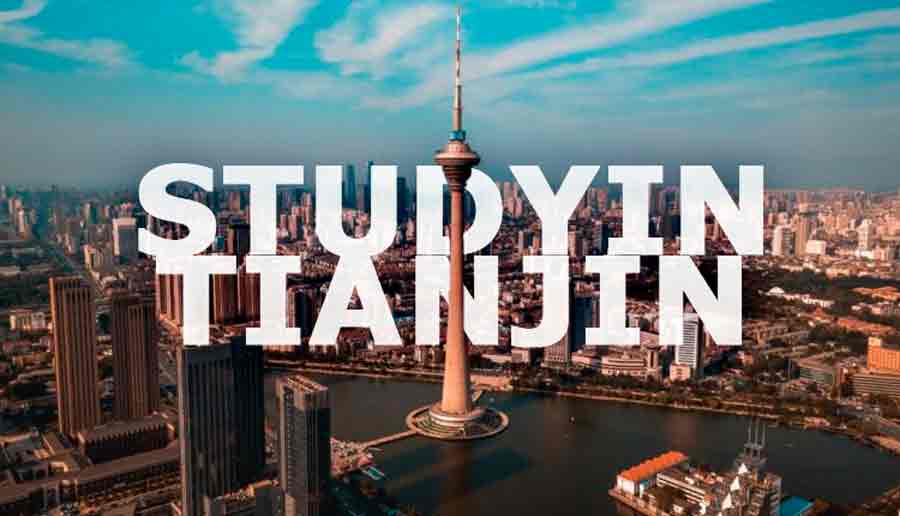
Study in Tianjin. Tianjin Universities

Former foreign concession port Tianjin – it is big, fast-growing. But at the same time calm city with the waterfront and charming European suburbs. You feel like spending all holidays there, in order to explore the city. Study in Tianjin gives you even greater pleasure since Tianjin universities are one of the best in China.

Study in Tianjin

Why choose to study in Tianjin

Excellent colleges and universities are located in Tianjin. Such as Nankai University and Tianjin University are international level universities. Study in Tianjin is ideal for international students to get good knowledge not only in certain areas but also in Chinese culture.

Study in Tianjin

Because of the low cost of living, varied cultural landmarks, shops and nightlife, together with the beautiful Bohai river, you will understand soon, why many students choose to study in Tianjin.

https://www.youtube.com/watch?v=z_g3oKXXU5Y

  • Tianjin – 6th largest city in China with a population of 13 million people – more than in London, New-Your to Tokyo.
  • The brilliant combination of traditional culture, modern conveniences and magnificent architecture.
  • More than 1200 international students study and live here.
  • You need only 30 minutes on a bullet train to arrive in Beijing.

If you are interested in Study in Nanjing, please, contact our consultants. They will answer all your questions and help you to choose a program in Tianjin.

Weather in Tianjin

Tianjin has 4 seasonal climate which is affected by monsoons, typical for East Asia. Winter in Tianjin is cold, windy and very dry. On the contrary, summer is hot and moist because of monsoon. Spring as winter here is dry and windy, because of it sometimes could be sand storms from the Gobi desert.

Nankai University

Nankai University

Nankai University has expanded international relations, by establishing exchange programs with more than 200 universities and academic institutions. Nobel laureates are Chen Ning Yang, Tsung-Dao Lee, Samuel Chao Chun Ting, Robert A. Mandell and Reinhard Selten, as well as former Korean President Kim Dae Jung and former US Secretary of State Henry Kissinger were awarded honorary titles of professor at Nankai University

Nankai University

University has invited international scientists and entrepreneurs as visiting professors at Nankai University. Nakai University is one of the most famous centers of mathematic in the world. Besides, Nankai has created dozens of Confucious Institutes around the world.

Tianjin University

Tianjin University formerly known as  Peiyang University was the first modern university in China. Since its establishment in 1895, was an academic leader in research and education, in keeping with the motto “In search of truth from facts”. University was renamed Tianjin University (TJU) in 1951.

Tianjin University

In 1959 It became one of the first national key universities and in the following years was under the “211 Project” and “985 Project”, aimed at the promotion of universities.

TJU is equipped with good teaching staff. It seeks to continuously improve the quality of education and level of academic researches. TJU is one of the best universities to study in China with over 20.000 international students from 120 countries and regions.

Tianjin Medical University

Tianjin Medical University was founded in 1951 and became the first medical university after founding Chinse Governmnet University. One of the first has received WHO recognition. On of the 74 universities has received permission from the Ministry of Education to admit foreign students. It began accepting foreign students since 1960. University was built following the “211 Project”.

Tianjin Medical University

At present, more than 1.200 international students are studying at the university from over 60 countries.

The medical English-taught courses are based on qualified teachers and learning environment.

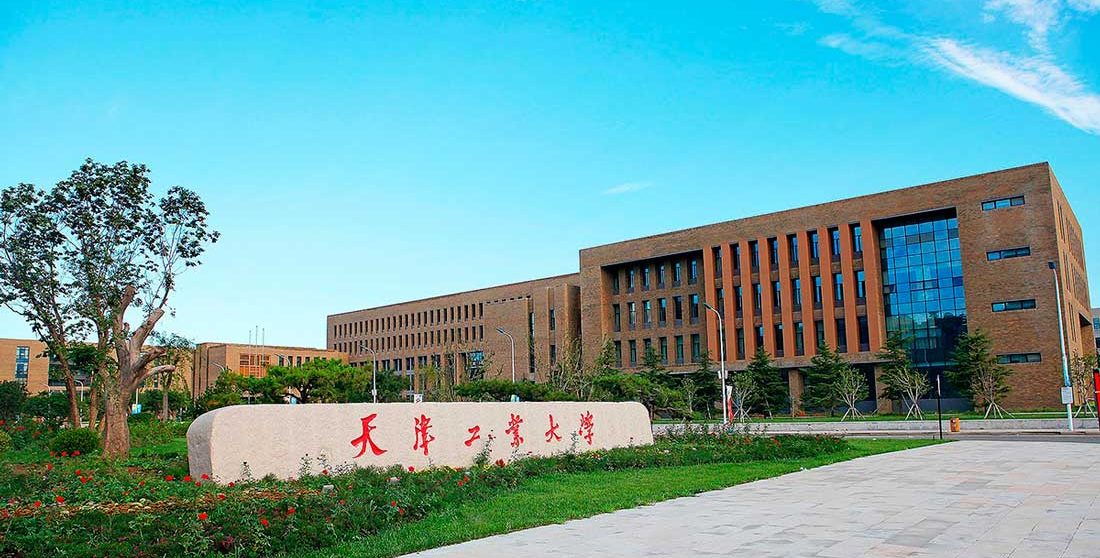
Tianjin Polytechnic University 

Tianjin Polytechnic University (TJPU) is the leading public higher education institution in Tianjin. Ministry of Education and the Tianjin Municipal Government together fund that university. In 2003 institution has received outstanding marks in the first group of “Evaluation of Undergraduate programs”. University has a long history, has established its first department in 1912.

Tianjin Polytechnic University 

Although engineering disciplines are the main subjects, the university provides different courses like physics, humanities, management, economics, jurisprudence. The university consists of 14 training units, offers 44 special subjects and 25.000 full-time students.

To get more information about scholarships in Tianjin Polytechnical University follow that link. Also, you can leave your questions in the comments below.

Tianjin University of Traditional Chinese Medicine

Established in 1958 Tianjin University of Traditional Chinese Medicine is one of the first universities TCM in China. University has an excellent studying environment with a modern level of development. Outstanding teaching staff and more than 3.000 employees. It is highly regarded and respected all over the world.

Tianjin University of Traditional Chinese Medicine

Higher education institution has 4 parts: medicine, science, arts and management. University provides 18 P.h.D., 28 mater’s and 16 bachelor’s programs. The science of acupuncture and moxibustion is a key state program. Currently, 7.000 students are studying at university.

Also, on our website you can find information about  Tianjin Normal University.

Work while studying

Study in Tianjin

While studying at Nankai University you will probably have a chance to participate in internships or employment. Tianjin is a perfect place for that, with 285 companies from the Fortune list in the city, such as Samsung, Toyota, Yamaha, Motorola and many others.


Tuition fees to study in Tianjin

Degree Tuition fee
Bachelor 2100-3800$
Master 3600-5700$
P.h.D. 4700-5700$

Chinese differ from Westerners

Illustrations by Yang Liu

Chinese differ from Westerners in their worldview, behaviour, reactions and preferences. There are many volumes of literature, hundreds of dissertations about that issue. No matter how many years you have lived and worked with Chinese, you will not be able to get used 100% to the differences. Even after you’ve learned the classics by heart, you may admit that you don’t understand Chinese at all.

We want to show you a series of graphic illustrations made by the Chinese artist Yang Liu. She lived in China until the age of 14, then moved to Germany. She was able to quite clearly display the difference between the Eastern and Western approaches to life. Of course, China is changing and modernizing rapidly. And, perhaps, after some time, some of the postulates from this scheme will become obsolete. Moreover, any scheme is a generalization. And there are always exceptions to the rule.

The blue parts are Western, the red parts are Chinese.


Freedom of expression

Chinese differ from Westerners

This scheme illustrates not only freedom of expression, but also the way to attain the goal. Western clearly see the goal and goes to it. The Chinese follow a twisting route. They focus not on the goal, but on the way to it – the process is more important. This path will never be straight. Only evil gooie spirits walk on straight paths. This feature is also embedded in speech: due to the fact that there are many homophones in the Chinese language. Homophones – words that sound the same, but are spelt differently and have different meanings. Such situations often arise when the interlocutors misunderstand each other. Therefore, the Chinese say the same thing several times, in different words. A European will say this much faster, with a minimum of words and phrases.


Punctuality

Chinese differ from Westerners

“Accuracy is the courtesy of kings and the duty of all good people”. With these words, the rapid development of etiquette begins in Europe. The Chinese have a more vague framework. However, if the Chinese want to please you, he will appear second a second, and sometimes in advance.


Queue behaviour

Chinese differ from Westerners

Quite often the Chinese stand like this – in a bunch. And as space becomes free, they rush to the target, actively working with their elbows. You snooze, you lose. At the same time, if you politely ask to let you pass, they will do it without any questions.


The noise level in public places

Chinese differ from Westerners

In Europe, public places are generally much quieter than in China. They all speak loudly. However, you quickly get used to it.

If you want to study in China, please, contact our consultants. They will answer all your questions. Also, you can leave your questions in the comments below.


Social communications

Chinese differ from Westerners

Western society is more atomic; a person does not have many personal connections. In China, personal connections play a very important role. Basically, everything is achieved through personal connections. The web of all kinds of relationships – family, friendship, business. Thanks to this, many issues can be solved quite easily. However, this is also a serious obstacle.


Problem-solving approach

Chinese differ from Westerners

If the problem can be circumvented, the Chinese will do it. This is the art of Tao – not to go through the thicket, but to get around obstacles. Just like water flows around a stone. In this regard, the Chinese differ from Westerners quite strong.


Own ego

Chinese differ from Westerners

The ideas of human rights, personal integrity and private property have a long history in Europe. Collectivism is one of the characteristics of the Chinese. The ego is criticized both in traditional teachings (Confucianism, Taoism) and in Buddhism. The ego is what obscures the Tao, the true nature of reality, from the person.


Relationship with the leader

Chinese differ from Westerners

Between the leader and subordinates in China, a vertical relationship of the “senior-junior”. It is governed by the Confucian principles of “fatherly love” and “filial piety.” Even if the boss is younger than the subordinate.


Travel behaviour

Chinese differ from Westerners

Comparing Europeans and Chinese people, the Chinese take a lot more pictures. Moreover, they still love to be photographed. Sometimes it is difficult to photograph an object because a Chinese woman or a couple taking the most incredible poses while someone photographs them.


Three meals per day

Chinese differ from Westerners

Europeans and Americans often use semi-finished foods. The Chinese, on the other hand, prefer freshly prepared food or food in eateries. However, young people actively buy semi-finished products and eat them.


Popular dishes

Chinese differ from Westerners

For a Westerner, Western food is still more familiar and popular, and for the Chinese, Chinese. But with exotic things the opposite is true. For us, exotic is oriental cuisine, and for the Chinese – European cuisine.


You may be interested in reading this article to help you prepare for your trip to China.

Drink preferences

Chinese differ from Westerners

The fact that all Chinese people drink tea is not entirely true. Good tea is very expensive. Therefore, many Chinese people still prefer plain water.


Attitude to weather and life situations

Chinese differ from Westerners

Keeping face in all situations is another quality of the Chinese. This is primarily about educated Chinese or those who want to please you.


Party behaviour

Chinese differ from Westerners

At parties in Europe, buffets are often held. Society is split into small groups. The Chinese, on the other hand, often sit at a large common table with dishes.


Attitude towards elders

Chinese differ from Westerners

The Chinese do not have such a developed pension system as in European countries. Caring for the older generation often falls on their children and grandchildren. Moreover, in traditional society, the older generation is the bearer of knowledge and traditions that it must pass on to young people. However, on the Chinese streets, you will not find grandparents with grandchildren everywhere. Usually, you will the elderly near parks or houses.

In this article, we have explained how the Chinese differ from Westerners using illustrations by Yang Liu. You can find more illustrations by following that link.

Study in Changsha. Changsha Universities

Study in Changsha

Study in Changsha. During 3000 years this city on the Xiang River has prospered as the center of agriculture and intellectual development. In the 1920s it was so beautiful that the British philosopher Bertrand Russell compared the medieval city. Nowadays, it is a modern, vigorous city which is known mainly for its Mao Zedong’s landmarks. Changsha is one of the best cities in China to study and knowledge of attractions and secrets of China.

Study in Changsha

If you are interested in study in Changsha and you want to know more about applying to Changsha universities and Scholarships, please, contact our consultants. They are ready to answer all your questions and help you to choose the most suitable university and program.

You can learn more about the scholarships provided by China by following the links below:

History

During the 1st millennium BC, it was the center of the southern part of the Yangtze River Valley in Chu province. In 1935-1936, some graves excavated nearby the Chu had provided important evidence of Chu culture. The oldest name of the city was Qingyang. During the Qin dynasty (221-207 BC), it became an intermediate point for the Qin expeditions to Guangdong province. Since Han times  (206 BC – 220 AD) became known as Lingxiang district and the seat of Changsha command.

Study in Changsha

County was renamed Changsha in 589 when it became administrative center of Tang prefecture. However, at that time it lost some importance because traffic had redirected from Guangdong to the Gan River Valley in Jiangxi province. After the fall of the Tang dynasty (618-907), it became the capital of the independent state of Chu(927-951). Later it passed to other regional powers until was incorporated into the Song dynasty (960–1279). Between 750 and 1100, when Changsha became an important commercial city, the region’s population increased tenfold.

Culture

The Museum of Hunan province is located in Changsha. 180.000 historically significant artifacts, from the Zhou dynasty to the Qing dynasty, are housed in 51.000 acres of space in the museum. Mawandui – a famous tomb located 22 kilometers east of Changsha. It was found with numerous artifacts from the Han dynasty. Multiple silk funeral banners surround the tomb. The tomb of Lady Dai in Mawandui became well known for its well-preserved condition. Scientists were able to detect blood, do an autopsy and determined that she died of heart disease due to malnutrition.

Study in Changsha

Climate

Changsha has a mild subtropical climate with an average annual temperature of 17° C. Average annual rainfall is 1.331mm. Four seasons are different. Summer is long and very hot with heavy rains. Autumn is comfortable and the driest season. Winter is cold and cloudy with gentle rains. A cold snap occurs when the temperature drops below zero. Spring is especially rainy and humid. Sun shines less than 30% of the time.

Study in Changsha

Modern Changsha

Changsha was rebuilt after 1949 and its population tripled from the late 1940s to the early 1980s. Nowadays, the city is a huge port, which cultivates rice, cotton, timber and livestock. It is also a collection and distribution point on the Hankou to Guangzhou railroad.

Study in Changsha

The textile industry produces cotton yarn and cloth, dyeing and printing.

Hunan University

Hunan University is located at the foot of Yuelu Mount and on the west bank of the Xiangjiang River in Changsha. It has the name “Ancient Millennial Academy, the famous centennial university”. As one of the key and most comprehensive universities, associated with the Ministry of Education. It is on the list of the “211 Project” and “985 Project”.

Hunan University
Hunan University

Central South University

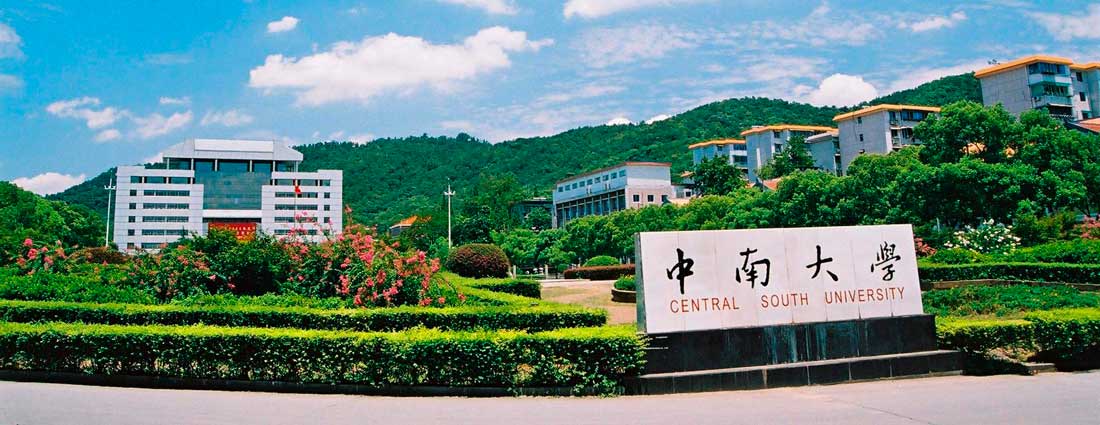
Central South University (CSU) is located in Changsha Hunan Province, China. It covers 2.760.000 square meters and campuses are located east and west of the Xiangjiang River. CSU has great landscapes of Yuel Mount and Xiangjiang River. It is an ideal place for study and research.

Central South University

As a key university directly under the Ministry of Education of the People’s Republic of China. It is also on the list of the “211 Project”, “985 Project” and “2011 Project”. In September 2017, the State Council registered this university as one of the “Double First Rate” universities.

Changsha University of Science and Technology

With over 60 years of history, Changsha University of Science and Technology is becoming a multidisciplinary university. It combines engineering, management, economics, humanities, jurisprudence, philosophy and arts. It offers available postdoctoral research jobs, doctoral degrees and recommending graduate students for a master’s degree.

Changsha University of Science and Technology

The university is located in Jinpenling and Yuntang campuses. Its area is about 200 hectares, and the total area is 1.2 million square meters. It has funds totaling 3,952 billion yuan. There are more than 3,3 million printed books and 782,3 thousand electronic books.

Hunan Normal University

Hunan Normal University focuses on fundamental and quality education, with particular focus on the development of both applied talents and expert researchers. Until 2017, it educated more than 400.000 students. Hunan Normal University is highly prised by society due to its excellent quality education. Nowadays, it has 3 CFCRS programs and 176 partner institutions in 42 countries. Also created 3 Confucius Institutes in Russia, Korea and the USA.

Changsha University

Changsha University(CCSU) was founded in 1983. As a unique complex institution affiliated with the Changsha municipal government. Campus, which is located in the ancient Hongshan temple in the Kaifu area, has an advantageous geographical position and convenient access to all directions. Endowed with adorable natural landscapes, it has become an ideal choice for study and research.

Changsha University
Changsha University

The university has 15 departments, which offer 43 bachelor’s programs. Until now, for its strategic development, an integrated multidisciplinary network has been formed. Within the framework of which engineering, management and scientific, humanitarian and legal issues have been developed.

If you want to know more about Changsha Universities, contact our consultants. Or leave your questions in the comments below.

Studying in Shanghai. Shanghai Universities

study in Shanghai

Shanghai always held a special place in Chinese history and the economic development of the country.  Change from a small fishing village to the main port of China. Shanghai became the first free trade area in China. Here carries out tests of economics and socials reforms. Shanghai is a reflection of the new progressive China. Studying in China is a springboard for the realization of future goals. Also in this article, we have described the best universities in Shanghai.

Study in Shanghai


Why choose Shanghai?

Leading city of Asia. Shanghai is a prime example of “New China”. Most of the upper-class of the country live here. In headquartered of the city work innovation Chinese firms, as well as international companies: Coca-Cola, IBM, Mercedes, Nikon and others.

The city is open to foreign trades.  Cultural diversity and ethnic groups had a significant impact on the development of educational institutes in Shanghai. Because of attractive career opportunities, Shanghai universities quickly took the leading places in China.

7 Universities in Shanghai have taken the places in QS World University Rankings (2018):

Below we will tell you about Shanghai universities.


Shanghai – the city of international career

Because of the position of Shanghai among international business as

Shanghai is known as the busiest container port among international business. After graduating from university in Shanghai you will be able to work in a multinational company in the city and in a few years move to another branch around the world. Whether, do you see yourself in finance, commerce, education or in another department, if you manage to find a job in Shanghai, it will be a great start for your career.

Studying in Shanghai


Academic environment

About 500.000 foreign students study in China, many of them study in Shanghai. The city ranks 29 in the index of the best student cities QS. A high score on employer activity (14th place) and students’ experience (3rd place) show how highly students and employers appreciate Shanghai universities.

Chinese Governmnet recently realized plans to convince international students to stay in China and after graduation. Implementing a new policy which allows foreign students to take a part in internships, a part-time job and even open a business in China after graduation, which was pretty hard before.


Culture of learning

The education system in China is hierarchical. This means you will always address teachers formally as “professor” of (lăoshī) in the Chinese language. Students with the same schedule or attending classes individually with different students, each lecture depends on your specialty. Your scores will be calculated depends on your examination results or projects.


Language of study

Shanghai is the most international city in China. Many universities provide studying in the English language. Most universities require an HSK4 certificate. If you do not the Chinese language, you need to pass one-year Chinese language courses.

Main Shanghai Universities

Shanghai ranks 29th place among the best student cities in QS in 2019. Also an exceptionally high place in terms of student experience and employers’ activity. This means that you have a chance to work in big Chinese companies. Shanghai government provides scholarships for international students. More about this and other scholarships we wrote here.


Dear readers, if you have financial and academic potential to study in Shanghai, follow that lead. You will not be sorry.

1. Fudan University

Scholarships in ShanghaiFudan University is the fourth-strongest university in China. The state educational institution was founded in 1905. He is also a member of the C9 League and is among the top 100 best in the world. A huge plus – the students are given a chance to practice in an international company, which in Shanghai a large number. Also after receiving the certificate, graduates are in demand and have the opportunity to get to work with high income.

Any student of this institution can boast of strong knowledge in the field of chemistry because the university is ranked 51st in the world ranking. Besides, among the strong disciplines, we can mention mathematics (76th place) and computer science (151st place).


2. Shanghai Jiao Tong UniversitySJTU

Shanghai Jiao Tong University – closes the top three of the country’s strongest institutions. The state institution was founded in 1896. It takes the 79th position of the world ranking of the best universities in the world.

Shanghai University of Transportation is a member of the League of C9 – elite universities in China.

University has 20 schools with 60 majors on bachelor’s degrees, 152 programs on master’s degrees and 14  government laboratories and engineering centers. SJTU ranks 62nd place in the top of the best universities of QS World University Rankings.


3. Tongji University

Scholarships in ShanghaiTongji University is a state university in China, which began its activity in 1907. It takes the 14th place in the national rating of the strongest educational institutions of Great China, and in the world rank, it holds the 308th position. The campus is near Shanghai.

According to the QS World University Rankings, Tongji University was ranked 316th overall and 18th in architecture in 2018. The number of students about 36.000, 4.000 of them are international students.


4. East China Normal University

East China Normal University was established in 1951. It aims to train teachers for secondary and higher education. Today ECNU is one of the best science-intensive universities in the world. University has 23 schools, 2 colleges, 11 research institutes and 58 departments. There are currently over 25.000 students, including over 4.200 international students.

Scholarships in Shanghai


Apply to Shanghai

Because of the large number of universities in Shanghai, it is easy to choose a program. Most universities have special quotas, which allows foreign students to study for free. However, exists some basic requirements for applicants.

To learn more about programs, please, feel free to contact our consultants or leave questions in comments below.


Tuition fees and scholarships

Average tuition fee in Chinese universities starting from 3.300 to 10.000$ per year. English language programs on average from 2.200 to 4.500$ per year. It should be noted, that degrees in medicine, engineering or business are the most expensive, from 24.000 to 50.000$ per year.

Tuition fees table:

University Tuition fee per year
Fudan University 8.000 – 11.000 $
Shanghai Jiao Tong University 5.000 – 12.000 $
Tongji University 2.400 – 4.850 $
East China Normal University 2.600 – 4.100 $

Study in Dalian. Dalian Universities

Study in Dalian. Dalian, surrounded by the Yellow Sea, is one of the most beautiful cities in China. Its temperate climate, fresh air and early 20th-century architecture attract the attention of many international tourists. Dalian is a perfect place to rest on beaches and hiking along the south-west coastline.

Study in Dalian

If you are intrested in study in Dalian, please, contact our consultants. They will answer all your questions. And also you can leave application direcctly on our website.


You can learn more about the scholarships provided by China by following the links below:

Dalian Universities

Climate

Dalian is vulnerable to a humid continental climate, with moist summer. Siberian anticyclone impact on dry winter.

Dalian Universities

History

Dalian as a city is young by Chinese standards. It has begun its history in 1898. As in Hong Kong, Shanghai and Qingdao, the development of Dalian started with the colonial occupation. Under Russian rule, Dalian became the final destination in the south of the Trans-Siberian Railway and the main port of the eastern part of the Russian Empire. After the defeat of Russia in the Russo-Japanese War 1904-1905, the city was transferred to Japanese control and renamed Dairen.

Dalian Universities

Chinese Government regained control after World War II and in 1950 became known as Luda city with the Communist regime. There followed a period of relative stagnation until 1984 (Dalian) government opened the city for international investment. This triggered the first period of rebuilding of the city.

Additional information about Dalian

Port in Dalian is one of the largest in China. The city in turn is a fishing and maritime center of the country. The new harbor, built about 31km east of the original harbor, is large enough to accommodate ships up to 100.000 tonnes. The city continues to be an important railway station. International Dalian Airport operates flights to cities in Japan and Korea, as well as to other major cities in China.

Study in Dalian

Study in Dalian

Study in Dalian is a great chance to receive a quality and internationally recognized education. Dalian comprises 23 general education institutions, 7 private colleges, 108 secondary vocational schools, 80 regular high schools. There are over a million students on a campus of all levels.

Study in Dalian

If you have questions about life in Dalian, you can leave them in the comments below.

Dalian University of Technology

The Dalian University of Technology – is the first official university of a new type founded by the Chinese Communist Party. Dalian University of Technology (DUT) is a key national university. Its administration was under the Chinese Ministry of Education. “211 Project” and “985 Project” also support that university.

Dalian University of Technology

The Dalian University of Technology has 3 campuses (Lingshui, Development Zone and Panjin) in two cities (Dalian and Panjin). It covers a total area of 4,262 million square meters with a building area of 1,68 million square meters. The university library stores more than 3.668.000 books and 58.000 electronic and Chinese journals. University also has well-established cooperation with 207 universities and research institutes in 29 countries.


Dalian Maritime University

Dalian Maritime University (DMU) – is a key maritime institute under the Ministry of Transport of the People’s Republic of China. DMU is one of the key universities in the national “211 Project”. Ministry of Transport, Ministry of Education, State Oceanic Administration of China, People’s Government of Liaoning Province and Dalian  Municipal Government together support university development. The university is “Cradle of Seafarers” and a famous higher maritime education institution in China.

Dalian Maritime University

The university has an international vision of academic cooperation and exchange. To date, DMU has established a cooperative relationship with 134 international maritime institutes in 35 countries. The university actively engaged in mutual visits, faculty and student exchanges, cooperation programs and research projects.

Liaoning Normal University

Liaoning Normal University (LNNU) is one of the key institutions of higher education in Liaoning province. It is the largest leading pedagogical institution in the province. The university is well-known as a foundation for primary and secondary schools, higher education, continuing education teacher training center.

Liaoning Normal University

The university is a former Human Pedagogical School, which was founded in 1951. It was the first pedagogical College in China. University became known as Dalian Teachers School in 1953 when 7 teacher colleges have merged into 3. It turned into Dalian Teachers College in July 1958 and Liaoning Teacher College in 1960.  In December 1983 had received  Liaoning Normal University name.

Dalian Jiaotong University

Dalian Jiaotong University located in the charming coastal city of Dalian and was founded in 1956. Previously, the Ministry of Railways used to manage the university. In March 2000 It was transferred under the control of the Liaoning Provincial Government.

Dalian Jiaotong University

In May 2004 became known as Dalian Jiaotong University. Which is the only secondary school characterized by traffic and transport. With 50 years of construction and development, it has been a solid foundation for its further construction and development as a high-level university with strong teaching ability, high level of scientific research.

Dalian Medical University

Founded in 1947 with the former name Kanto School of Medicine, Dalian Medical University was incorporated into Dalian University in 1949 and named Dalian University School of Medicine. In fact, the school has a fairly rich history of travel, since its inception, the location of the college has been changed several times. The university has a ministerial-level research institute, as well as five regional primary laboratories and six training laboratories for regional universities.

Dalian Medical University

Dalian Medical University management makes an effort to create all the necessary conditions for comfortable learning and research. One of the goals of these measures is to raise the level of the university in the international arena, having established itself as one of the leading universities in China.

Leave your questions about Dalian in the comments below. Our consultants will contact you.

Numbers in China
Chinese numbers

As in all countries of the world, numbers in China are used to represent different digits. As elsewhere, Chinese numbers are divided into two types:

  • ordinal numbers: which denote the serial number of something, for example, the first, second;
  • quantitative numbers: denoting quantity or count.

You should write numbers in China, like all other written characters, by using hieroglyphs. This is the main difference between the Chinese numbers and European ones. You can write composite numbers by combining hieroglyphs in the desired order.

In China, you can count up to trillions, the large digit capacity of numerals in Chinese will allow you to do this. There are two styles to write numbers in China:

  • regular: they have a simplified form and people use them in everyday life;
  • official: this style means writing numbers in the form of a complex combination of hieroglyphs. People use them mainly in official documents, invoices, checks in stores.

The picture below illustrates how Chinese numbers can be shown by hand:

Numbers in China

The numbers in China look like this:

1
èr 2
sān 3
4
5
lìu 6
7
8
 jǐu 9
Líng 0

In order to write down the numbers from 11 to 19, you must first write the hieroglyph 十 (shí), meaning “ten”, then the numbers from one to nine are added. Numbers from 20 to 99 can be written in a similar way, the only difference is that the hieroglyph “ten” must be written not before the number, but after. If the number has a capacity in units, then it is indicated by the third hieroglyph from the right. We will show you some examples:

20 – 二十, 30 – 三十, 40-四十, 50-五十,25-二十五,38-三十八,99-九十九

If we talk about ordinal numbers, then everything is simpler. They are formed only with the prefix di (第), for example, Dì yī – the first, Dì wǔ – the fifth, etc.

Interesting fact. In Chinese, all items are counted exclusively in pieces. For example, you cannot say “two bananas”, the Chinese say “three pieces of bananas”.

Since ancient times, numbers in China have been used not only to indicate numbers but also as symbols. Odd numbers are Yang masculine, and even numbers are Yin feminine.

Meaning of numbers

We will briefly tell you what the Chinese numbers from 0 to 9 mean:

— 0 is used to denote completeness, emptiness and God. Zero is infinity; it has no beginning or end.

— 1 symbolizes leadership, honor and dignity and denotes continuous improvement and development.

— 2 is the balance between Yin and Yang, that is, between a woman and a man, also denotes cooperation. Often at wedding ceremonies, you can see the hieroglyph of this figure, because it means “double happiness”.

— 3 According to the “Book of Changes”, which describes all the numbers in China, the number 3 is the unification of earth, sky and man. Three for luck, success and achievement of goals.

— 4 it is a figure of the material order, it symbolizes the material world. However, this figure can be compared with our number “13”, it is also considered an unfavourable sign and is pronounced like the word “death”. In Chinese hotels, you cannot find a fourth floor and a fourth room.

— 5 these are water, fire, metal, wood and earth (philosophical elements), as well as health, longevity, love of life, prosperity and death (blessings). A very significant figure for the Chinese.

— 6 auspicious number, similar to the word “prosperity”.

— 7 considered a feminine number that determines her future life.

— 8 denotes abundance. People use as a talisman and defining a man’s life.

— 9 contains the characteristics of all the above numbers, therefore it is considered the number of the emperor.

These are such mysterious and interesting numbers in China, not just squiggles indicating the quantity, but symbols of wisdom.

Also, advise you to read our article about the differences between Chinese and Westerns.

Study in Foshan. Foshan Universities

Study in Foshan

Study in Foshan. A 30 minutes metro trip delivers travelers from Guangzhou to this city. Foshan, which means “Buddha Hill”, was famous for its ceramics during the Min dynasty. Nowadays is commonly known as the birthplace of Kung gu icons: Wong Fei Hung, Yip Man and Bruce Lee. The Kung fu Fu Wing style was also developed here.

Study in Foshan

If you are interested in study in Foshan and you want to know more about applying to Foshan universities and Scholarships, please, contact our consultants. They are ready to answer all your questions and help you to choose the most suitable university and program.

You can learn more about the scholarships provided by China by following the links below:

Features of the city

The city covers a total area of 3.798 square kilometers and has 7,4 million citizens. The mild climate and sufficient rainfall have made it a famous place for tourists. Foshan has a solid industrial foundation. It formed an industrial development complex, composed of 10 powerful industries. Such as, household appliances, equipment manufacturing, electronic and information technology, ceramic materials, metal processing and metal products.

Study in Foshan

Foshan also participates in emerging auto parts, biomedical and advanced display industry. Known as the hometown of the martial arts. The city is among the four oldest in all of China.

Foshan is an important place to promote Lignan and Guangfu cultures. Today in Foshan you still can see unique practices, like “Dragon dance and Lion dance” and “Crossing the Tongji bridge”.

Climate

Foshan is the perfect city if you like warm weather. It is considered one of the hottest cities in China. The average temperature is 22°C. In summer thermometer doesn’t drop below 30°C.

Study in Foshan

Landmarks in Foshan

Mount Xiqiao National Forest Park is an ideal place for hiking and campings. There is a 77-meter statue of Buddha located on top of the dormant volcano.

Study in Foshan
Mount Xiqiao National Forest Park

Sanshui Lotus World – you should definitely visiti that place. Known as the world’s largest lotus ecological park. There are more than 300 types of lotus.

Landmarks in Foshan
Sanshui Lotus World

Foshan Ancestral Temple – temple of ancestors is the most famous tourist attraction in Foshan. Temple covers area of 3.500 square meters. Here you can see breathtaking architecture.

Landmarks in Foshan
Foshan Ancestral Temple

Quinghui Garden loacted in Shunde Foshan city. It is one of the four main gardens in Guangdong province. With the incredible lanspace gardens and impressive architecture.

Landmarks in Foshan
Quinghui Garden

Chuanlord Holiday Manor is a huge amusement park. Consists of 5 theme zones: Screamiing Paradice, Fairytale Animal Kingdom, Chuanlord Vacation Village, Farm Stay Park, and Water World.

Landmarks in Foshan
Chuanlord Holiday Manor

Foshan University

Foshan University was jointly founded by Guangdong and Foshan governments in 1958. The university is a result of the merge of its predecessor with Foshan College of the South China Agricultural University.

Foshan University

After acquiring Foshan Medical College and Foshan Normal College in 2005, Foshan University turned into well structured interdisciplinary university with a full range of specialties. In 2007, the university passed the national certification for undergraduate programs with a high score. In 2010, the university received accreditation for the award of master’s degree.

South China Normal University (Foshan campus)

South China Normal University – a higher education institution with a rich history and heritage. Originally known as Xiangqi Provincial College was founded in 1933. In 1996 it became a member of the national “211 Project”.

South China Normal University (Foshan campus)

Currently, the university can boast of 3 campuses: Shipai campus, University campus and Nanhai campus. There are containing a collection of over 3,7 million books. The university has 24.835 students, 8.212 graduates, 909 doctoral students, 131 researchers and 1.181 international students from 20 countries.

Beijing Foreign Studies University (Foshan Campus)

Beijing Foreign Studies University is a prestigious university in China under the leadership of the State Ministry of Education. As the first  foreign language university, it offers most of the language programs in country. It excels in the teaching and learning of foreign languages, literature, sinololgy. Also serves as main base to provide quality specialists with language ability and global vision.

Beijing Foreign Studies University (Foshan Campus)

Beijing Foreign Studies University has 13 shools and colleges, 7 depatments and some research centers. They all teach in 67 languages, offer 73 bachelor’s, 42 mater’s and 14 P.h.D. programs.

If you want to know more about Foshan Universities, contact our consultants. Or leave your questions in the comments below.

Chinese Provincial Scholarship

Chinese Provincial Scholarship provides opportunities for international students to receive full scholarships, also as Government Scholarships. If you want to learn more about studying in China, follow the links below:

Do you want to get Chinese Provincial Scholarship? Feel free to contact our consultants.

Chinese Provincial Scholarship


Every year more and more foreign students want to study in China. So, the Chinese Government has developed many scholarships program, to help them continue their studies. One of the most programs is the Chinese Provincial Scholarship for international students.

Type of Scholarship
Chinese Provincial Scholarship
Application deadline June
Budget of Scholarship
30000-40000 RMB/year

In this graph you can see in which parts of China international students study:


Local authorities of the Chinese provincials and cities provide quotas. That quotas should attract foreign students for studying in their universities.

Here we will introduce more information about Chinese Provincial Scholarships:

Province/City
Number of Students
Beijing 80,786
Shanghai 614
Jiangsu 45,778
Zhejiang 3,819
Liaoning 27,879
Tianjin 23,691
Guangdong 22,034
Hubei 21,371
Yunnan 19,311
Shandong 19,078
Guanxi 15,217
Sichuan 1,399
Heilongjiang 13,429
Shaanxi 12,919
Fujian 1,034


Steps for receiving the scholarship

1st: Decide in which province and university you want to study (you can submit an application on our website Study in Chinas).
2nd: Fill out the form for Chinese Provincial Scholarship on our website.
3rd: Prepare all necessary documents for the application. Note: different scholarship programs may have special document requirements. 
4th: If you appealed to our services, keep in touch with consultants, to be informed about the status of your application.

Chinese Provincial Scholarship


Scholarships of Heilongjiang Province

Jiamusi University provides the Chinese Scholarship of Heilongjiang Province. Jiamusi University, founded in 1947 years, is a multidisciplinary university in China.

Why Jiamusi University

Jiamusi – core architecture university of the province with a high level of education. University is also universal with a wide range of categories and medical specialties.

  • Degree: bachelor’s, master’s and  P.h.D.
  • The scholarship covers: registration fees, tuition, experiments, practical training, basic studying materials, accommodation, health insurance, except fare and living allowance.
  • Nationality: international (except China).


Chinese Provincial Scholarship

Who can apply?

  1.  Nationality: foreign students (except China)can apply for that scholarship.
  2.  Degree and program: sponsorship will be awarded for all programs in the chosen university.
  3. Requirements:
    – Bachelor’s: certificate of finished High Scholl with good academic performance, the age limit is under 25 years.
    – Master’s: bachelor’s degree, the age limit is under 35 years.
    – P.h.D.: master’s degree, the age limit is under 40 years.


Scholarship of Fujian Province

The government of Fujian province established a scholarship for international students starting from 2012. In order to strengthen exchange and cooperation in the sphere of education between Fujian and other countries. Quota covers for international students bachelor’s, master’s and P.h.D. programs with tuition fees and accommodation.

Scholarship of Fujian Province

Who can apply?

  1.  Nationality: foreign students (except China)can apply for that scholarship in good health.
  2.  Duration of quota: 1 year.
  3. Requirements:
    – Bachelor’s: certificate of finished High Scholl with good academic performance, the age limit is under 30 years.
    – Master’s: bachelor’s degree, the age limit is under 35 years.
    – P.h.D.: master’s degree, the age limit is under 40 years.

University will choose the best candidates among students, who had received a quota, to continue for the next year. Selected candidates will forward to the Department of Education in Fujian province for final approval.

Recipients of the scholarship should register and pay all fees. Sometime in second-semester University will return all paid fees.


Scholarship of Hubei Province

Scholarship of the Hubei program in China is available for all nationalities except Chinese. Quota allows studying bachelor’s, master’s and P.h.D. programs in China.

Scholarship of Hubei Province

Types of Scholarships:

Type
Scholarship
Bachelor’s
10.000 RMB/year
Master’s
15.000 RMB/year
P.h.D.
20.000 RMB/year
General
10.000 RMB/ year
Advanced
20.000 RMB / year

Scholarship of Hubei Province

Who can apply?

  1.  Nationality: foreign students (except China)can apply for that scholarship in good health.
  2.  Duration of quota: 1 year.
  3. Requirements:
    – Bachelor’s: certificate of finished High Scholl with good academic performance, the age limit is under 25 years.
    – Master’s: bachelor’s degree, the age limit is under 30 years.
    – P.h.D.: master’s degree, the age limit is under 35 years.
  4. Be nice, hard-working, with excellent academic performance and in good health.
  5. Candidates for General Scholar: under 40 years.
  6. Candidates for Advanced Scholar: average age 50 years and with master’s degree.
  7. Chinese language knowledge depends on the type of chosen program.


Scholarship of Sichuan Province

Scholarship extends to higher education institutions of Sichuan province, where international students able to study. Such as universities, institutes, colleges, which had been approved by the Ministry of Education.

Scholarship of Sichuan Province
Duration:

Students will receive the scholarship while studying and if they are approved by the institution.

Scholarship:

Degree Quota
Bachelor’s
20.000 RMB/year
Master’s
25.000 RMB/year
P.h.D.
30.000 RMB/year
College
15.000 RMB/year
Long-term
10.000 RMB/year

When to apply?

Application deadline every year from January to June.

More information you can find on that website.